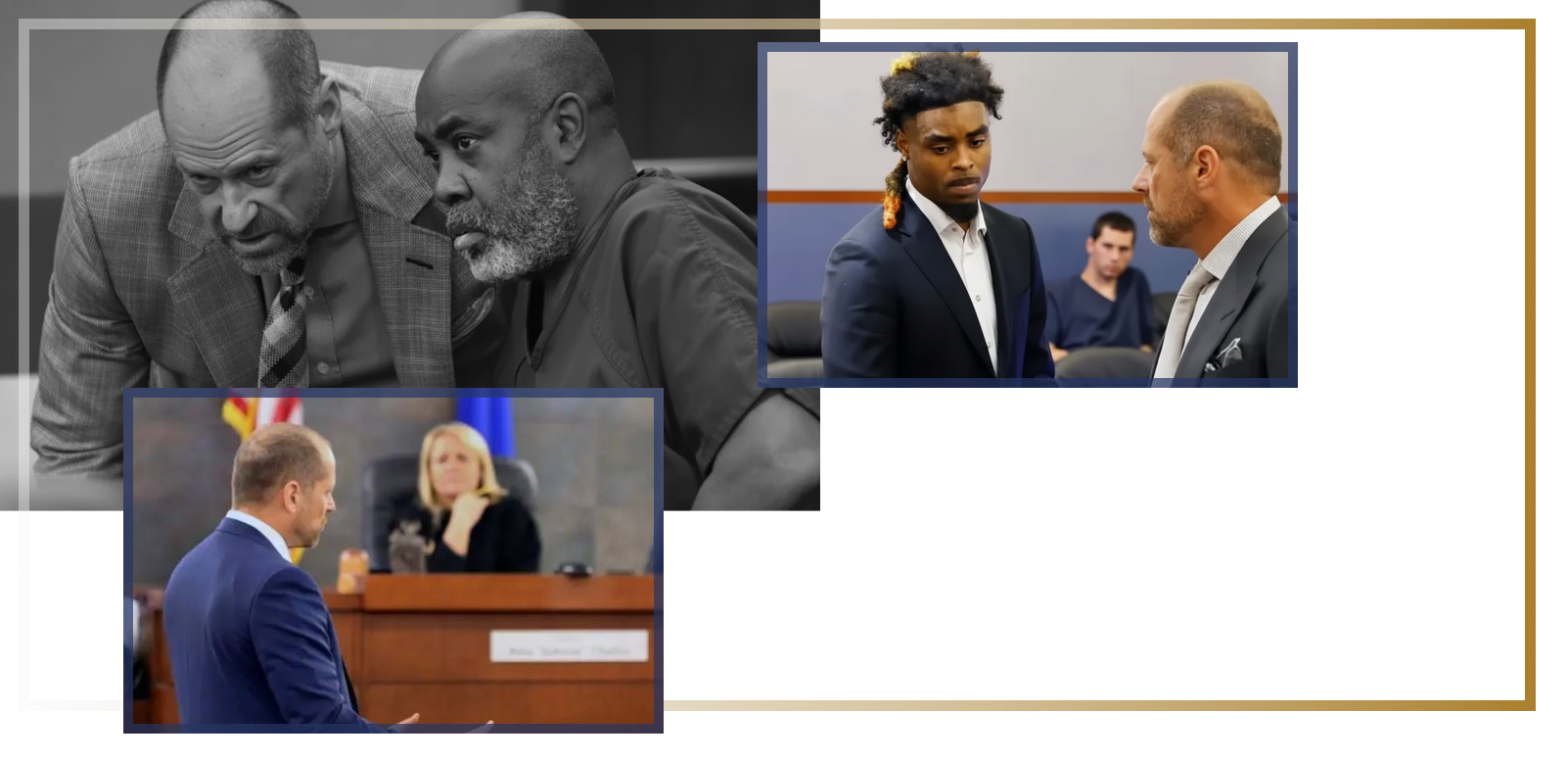
Overview of Nevada Homicide Charges
“Homicide” in Nevada is a broad term that covers several distinct offenses. Understanding the differences matters because the required proof, potential defenses, and penalties vary significantly.
Murder (NRS 200.010, 200.030)
Under Nevada law, murder is the unlawful killing of a human being with malice aforethought (intent to kill or extreme disregard for human life), or during the commission of certain serious felonies (felony-murder theory), such as robbery or burglary.
Nevada divides murder into:
- First-degree murder – premeditated killings, felony murder, and specific circumstances defined by statute. Punishable by life in prison with or without the possibility of parole, and in rare cases, the State may seek capital punishment.
- Second-degree murder – killings with malice but without premeditation or fitting the specific definitions of first-degree. Punishable by a lengthy term of years or life with the possibility of parole.
Most homicide complaints in Nevada are filed as open murder, meaning prosecutors can seek first- or second-degree murder charges depending on the facts.
Manslaughter (NRS 200.040, 200.050)
Manslaughter generally involves an unlawful killing without malice aforethought.
Nevada recognizes:
- Voluntary manslaughter – often associated with a killing committed in the “heat of passion” or during a sudden quarrel, where emotions overcome judgment.
- Involuntary manslaughter – an unintentional killing resulting from criminal negligence or during the commission of a non-felony unlawful act.
Manslaughter still carries severe prison exposure but is generally punished less harshly than murder. In some cases, moving a case from murder to manslaughter can mean the difference between decades in prison and a significantly shorter term.
Vehicular Homicide and Related Offenses
Some deaths involving motor vehicles are prosecuted under vehicular-specific statutes, including:
Penalties in Nevada Homicide Cases
Homicide cases carry some of the harshest penalties available under Nevada law. Depending on the charge and circumstances, potential penalties can include:
First-Degree Murder:
- Life in prison without the possibility of parole, or
- Life with parole after a set minimum term, or
- A long term of years, depending on the case and enhancements
Second-Degree Murder:
- Life with the possibility of parole after a set number of years, or
- A lengthy fixed term of years in state prison
Voluntary Manslaughter:
- A substantial term in state prison (Category B felony level)
Involuntary Manslaughter:
- Imprisonment and fines, often tied to the degree of negligence
Weapon enhancements, prior convictions, gang allegations, or multiple victims can increase exposure dramatically.
Even in non-murder homicide cases, collateral consequences are severe:
- Permanent felony record
- Loss of firearm rights
- Immigration consequences for non-citizens
- Civil lawsuits for wrongful death or related claims
Because sentencing ranges are wide and enhancements are common, early case strategy is critical. The difference between a murder conviction, a manslaughter plea, or a full acquittal often depends on what is done in the first weeks of the case.
How Homicide Cases Are Built in Clark County
Homicide investigations in Las Vegas are handled by specialized units that coordinate with crime labs, forensic experts, and, often, federal agencies.
Typical evidence in a homicide case can include:
- Witness statements taken at the scene, often under stress or confusion
- Surveillance and video footage, including casino, traffic, neighborhood, or business cameras
- Forensic evidence, such as DNA, fingerprints, ballistics, or gunshot-residue testing
- Digital evidence, including cell-phone location data, text messages, social media activity, and call logs
- Medical and autopsy reports documenting the cause and manner of death
- Recorded statements from suspects, often obtained during lengthy interviews
These cases are frequently built over months and involve layered narratives: what happened before the incident, during the encounter, and afterward. A disciplined defense looks at every stage of that narrative for inconsistency, overreach, or reasonable alternative explanations.
Defense Themes in Murder and Homicide Cases
No single strategy fits every homicide case. Goodman Law Group tailors the defense to the facts, evidence, and charges involved. Common defense themes include:
Self-Defense or Defense of Others
Nevada law recognizes the right to defend yourself and others from imminent harm.
Key questions include:
- Who initiated the confrontation?
- Was there a reasonable belief of serious bodily harm or death?
- Did the force used match the perceived threat, or does the State mischaracterize it?
Evidence such as prior threats, history of violence, and witness accounts can strongly support a self-defense theory.
Lack of Intent / Accident
Murder charges require proof of malice aforethought or extreme recklessness.
In some cases, the evidence more accurately reflects:
- An accidental discharge or the unintended consequences of a struggle
- Conduct that supports involuntary manslaughter or a lesser offense rather than murder
- A tragic event without the degree of intent claimed by the State
Reframing the case around what the evidence actually shows about intent can significantly reduce exposure.
Misidentification and Credibility Issues
In high-stress situations, memory and perception are often unreliable.
Problems can include:
- Witnesses who contradict one another on key details
- Identifications influenced by suggestion, media coverage, or group discussions
- Gaps between initial statements and later testimony
Careful comparison of each statement, video evidence, and physical facts often reveals doubt the prosecution underplays.
Causation Disputes
In some cases, the main issue is whether the defendant’s actions actually caused the death.
Other potential factors may include:
- Intervening medical issues or delays in treatment
- Other participants in a fight or incident
- Pre-existing conditions that complicate the cause of death analysis
Expert review of medical and forensic reports can change how causation is viewed.
Constitutional and Procedural Violations
Homicide cases often involve:
- Warrant-based searches of homes, vehicles, and phones
- Lengthy interrogations and recorded interviews
- Broad digital-evidence collection
Errors in warrants, Miranda violations, coercive questioning, or mishandled evidence can lead to suppression of critical parts of the State’s case.
Call 24/7 for a Free Consultation
If you or a loved one is under investigation or charged with murder, manslaughter, or a homicide-related offense, your next decisions carry lifelong consequences.
Before speaking with detectives or making any statements, speak with a Las Vegas homicide attorney who understands how murder cases are built and how they can be dismantled.
Call (702) 825-7854 or fill out our online contact form to discuss your situation with Ross Goodman, one of the top homicide lawyers in Las Vegas.
The Legal Process in Nevada Homicide Cases
While each case develops differently, most homicide prosecutions follow a predictable structure:
- Investigation and arrest. Detectives gather evidence, interview witnesses, and may approach you for a “voluntary” interview. Statements made at this stage can shape the entire case.
- Initial appearance and bail/detention. Homicide cases often involve high bail or requests for detention without bail. Early advocacy can influence conditions and how the court views the case.
- Filing of charges. The District Attorney decides whether to file charges and what level (murder, manslaughter, related offenses). Sometimes the State files open murder to preserve options.
- Preliminary hearing. The defense can cross-examine key witnesses and test whether there is enough evidence to proceed. This is a crucial opportunity to expose weaknesses.
- District Court proceedings. Once bound over, the case moves to District Court for formal arraignment, pretrial motions, negotiations, and trial preparation. Motions may target search warrants, statements, forensic issues, or evidentiary disputes.
- Trial. If no acceptable resolution is reached, a jury decides whether the State has proven each element beyond a reasonable doubt. Homicide trials are complex and often involve multiple experts and contested narratives.
Throughout each stage, Goodman Law Group’s role is to limit exposure, challenge assumptions, and preserve every possible path to dismissal, reduction, or acquittal. If you are facing homicide charges, you deserve the best defense.
Call Goodman Law Group 24/7 for a free consultation. As one of only two board-certified criminal defense attorneys in all of Nevada, Ross Goodman can bring a level of expertise to your case that few other lawyers can match.





 MSNBC
MSNBC








.2308101414231.png "Super Lawyers 10 Years")


.2308101413182.webp "AV Preeminent")